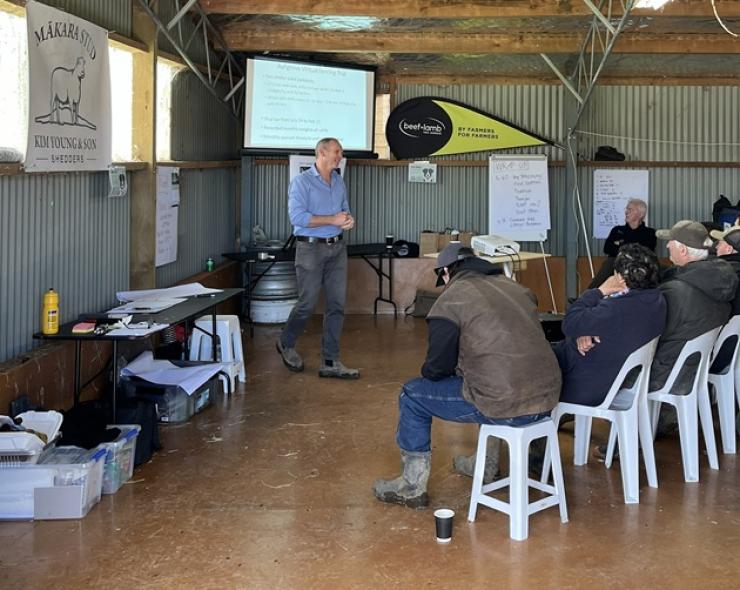
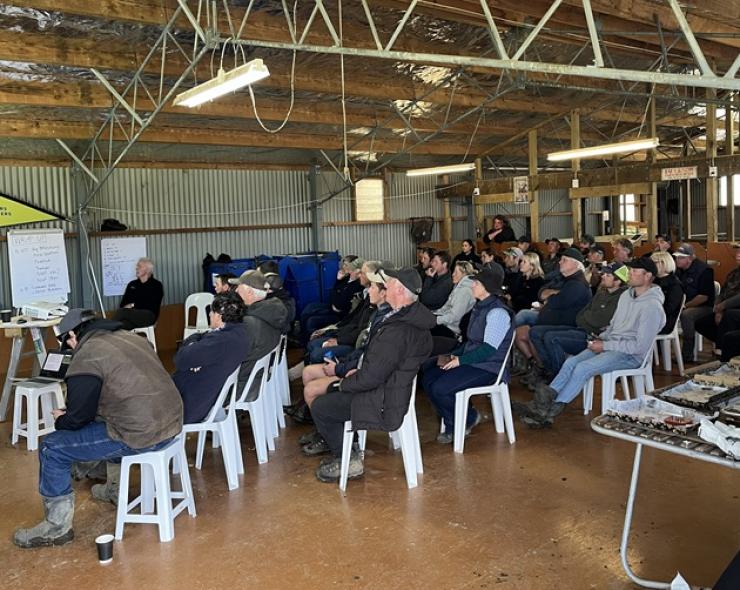
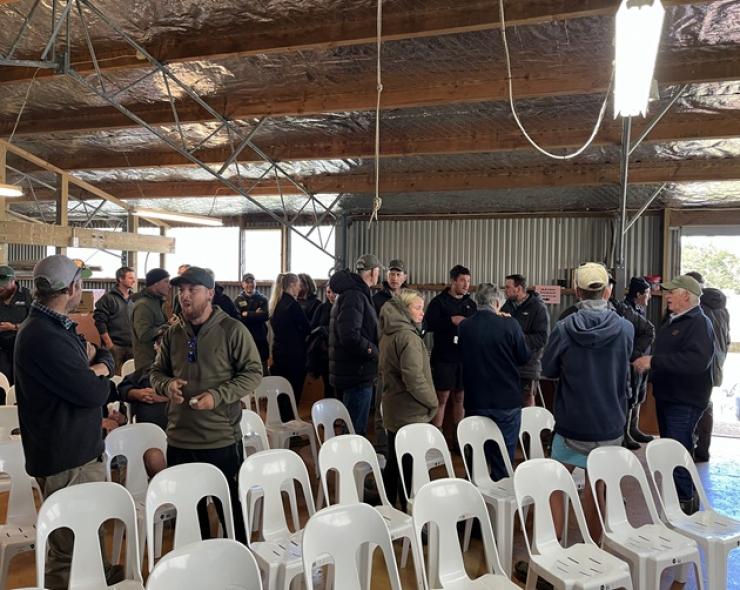
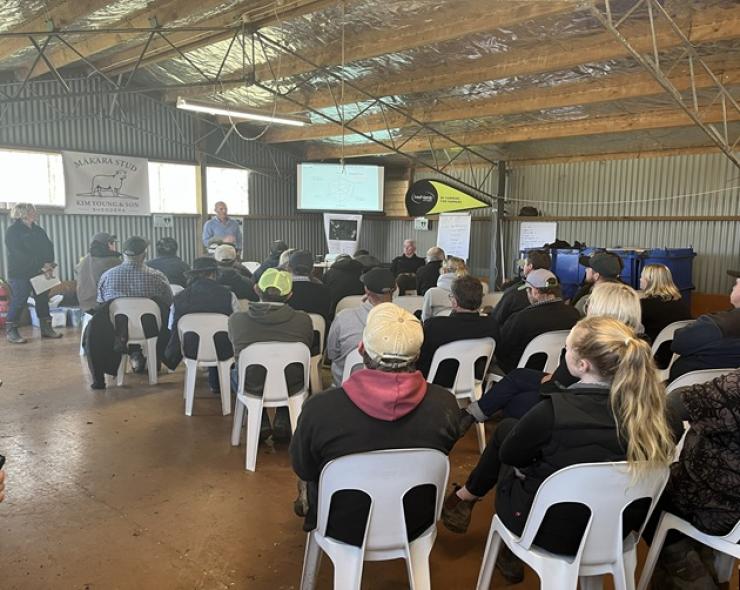
Around 70 farmers gathered recently for a B+LNZ virtual fencing workshop in Ohakune to learn how to get the most from the technology.

Discussions confirmed that while many farmers are keen to adopt virtual fencing, there is still a significant knowledge gap between purchasing the technology and successfully integrating it into a farming system.
Lisa Chase, B+LNZ Matanga Whenua Māori (Extension Manager) for Tūwharetoa/Whanganui, says there's a lot of interest in the space, but there's also a real need to build understanding around how to use the technology well.
"People are excited about the technology, but it's important to make sure the basics are sorted first."
A key theme throughout the day was the importance of having the right building blocks in place before introducing virtual fencing.
Water first, technology second
One of the strongest messages from the workshop was that reliable water infrastructure needs to be in place before farmers can get the full benefit of virtual fencing.
Participants heard that access to water is a fundamental requirement when using virtual fencing and that investing in water systems is an essential step towards using the technology effectively.
Without those foundations in place, farmers may struggle to unlock the full benefits virtual fencing can offer.
Learning from others
The workshop began by gauging where attendees were on their virtual fencing journey.
Discussions explored the range of knowledge and confidence across the group, from those just starting out to others already trialling the technology on-farm.
Topics included farm preparation, water infrastructure, grazing management, labour efficiencies, return on investment and some of the common pitfalls farmers can encounter when adopting virtual fencing technology.
Attendees heard from virtual fencing specialist James Parsons, who was an early adopter of the technology on his own 600ha hill country farm and now advises farmers on grazing plans, water systems and virtual fencing implementation. Parsons also introduced a virtual fencing readiness score based on six key areas: water, capital, skills and capability, systems, stock, and measurement and oversight.
They also heard from experienced agribusiness consultant Bob Thomson. Bob drilled into Beef system optimisations drawing on his 40 years' experience of working alongside sheep and beef farmers.
Attendees also visited recently collared cattle and gained insights from host farmer Callum Tahau of Kim Young Farms, who shared his experience integrating the technology into his farming system.
Like many in the room, Callum is still in the very early stages of his virtual fencing journey, providing a relatable perspective for farmers considering how the technology might fit their own operation.
Technology is becoming the new norm
The workshop also explored broader trends shaping the future of beef farming systems.
Drawing on insights from the recent Red Meat Sector Conference, Lisa encouraged farmers to remain open to new technologies and the opportunities they can create.
"Ten years ago virtual fencing seemed like a distant idea. Today it's becoming a reality on farms around the country. However just like an expensive dog, it’s not a lot of use if you don't know how to work the dog to its fullest potential," said Lisa.
The discussion reflected a growing confidence in both the red meat sector, and the role technology will play in helping farmers improve productivity, flexibility and decision-making.
More learning opportunities ahead
The strong turnout and level of engagement showed there is a clear appetite for more learning in this area.
Farmers were encouraged to share ideas for future workshops, with many expressing interest in a follow-up event focused on the next stage of their virtual fencing journey.
B+LNZ is planning another workshop around February.
Interested in hosting?
B+LNZ extends its thanks to Callum Tahau and Kim Young & Sons Farm for hosting the event, and to Nathaniel Turner from Catalyst Performance for sponsoring the post event refreshments and BBQ.
If you'd be interested in hosting a future field day and sharing your farm's story with other farmers, get in touch with your local B+LNZ Extension Manager. For those in Tūwharetoa/Whanganui, please contact [email protected].