B+LNZ has been active on the global stage in the last two weeks, representing sheep and beef farmers at international events in both Türkiye and Australia.

B+LNZ representing farmers internationally
B+LNZ has been active on the global stage in the last two weeks, representing sheep and beef farmers at international events in both Türkiye and Australia.
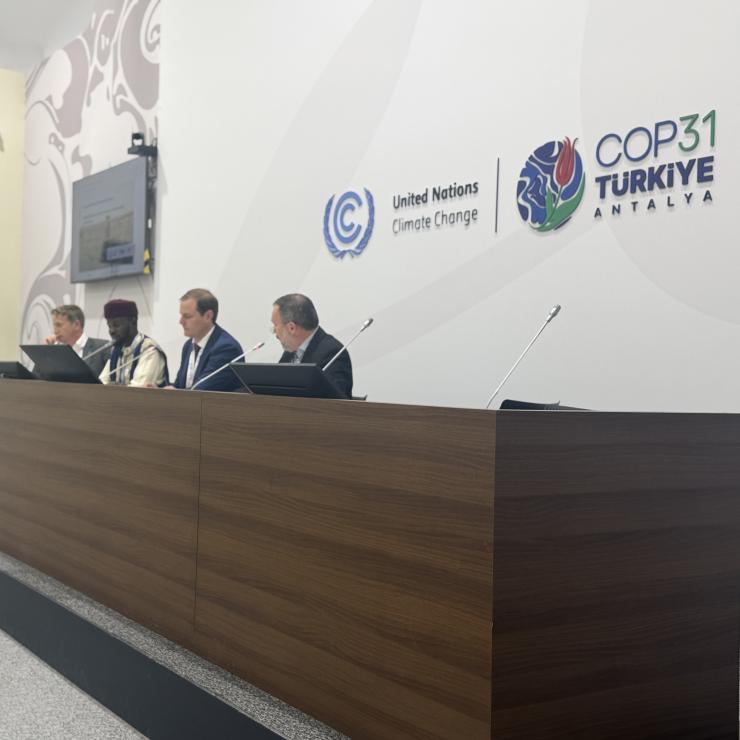
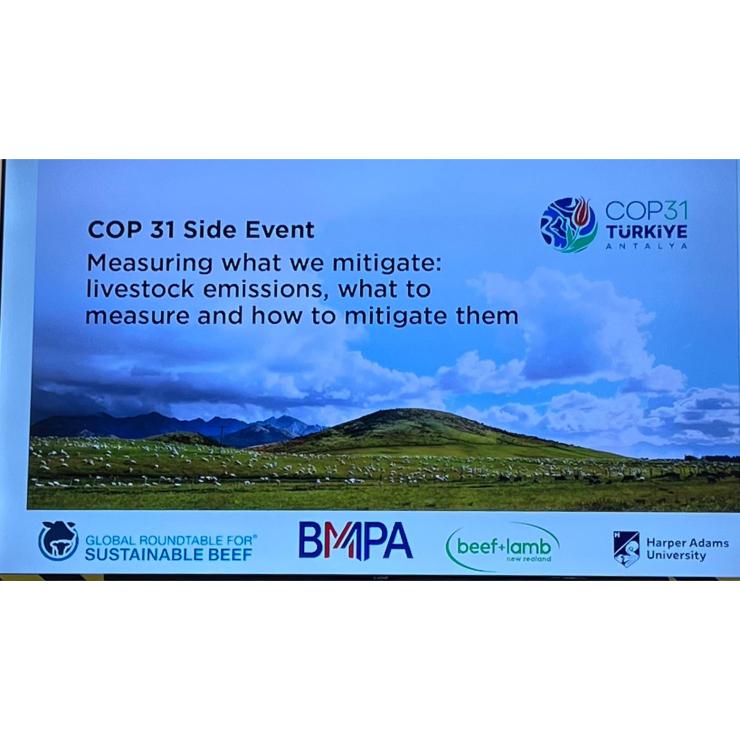
We co-hosted a side event at COP31 in Türkiye on Monday 16 November, discussing how to measure and mitigate livestock emissions. Side events provide observer organisations with an important opportunity to connect with COP31 participants, share ideas, and discuss practical responses to climate change.
B+LNZ joined with the Global Roundtable for Sustainable Beef, the British Meat Processors Association and Harper Adams University to co-host the 90-minute session.
The speakers explored the metric choices, measurements required and the range of practical mitigation options being implemented on farms today to reduce livestock's impact on climate.
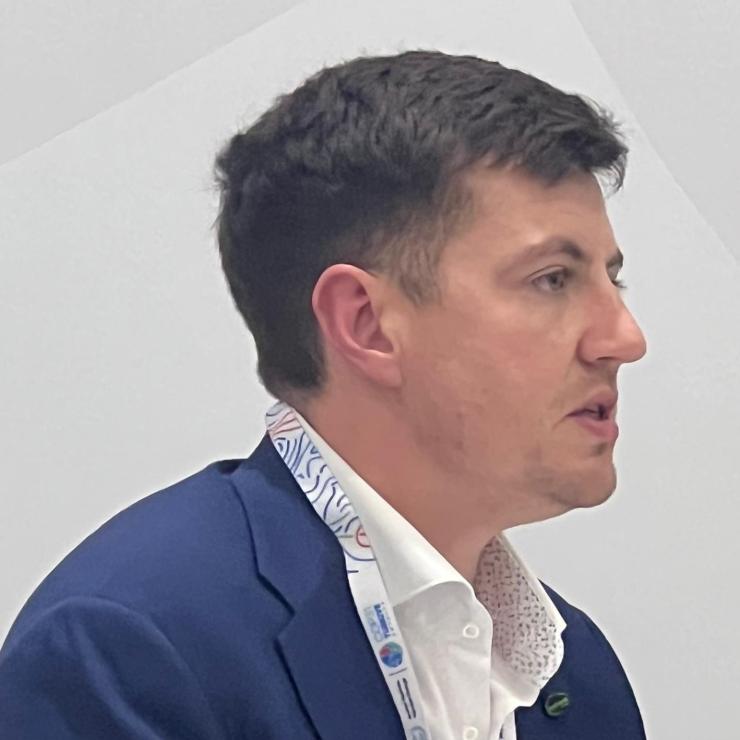
B+LNZ’s Director–UK & EU, Macaulay Jones, says he outlined New Zealand's subsidy-free, science-based farming system and the country's progress on its split-gas approach to methane since 2018.
He highlighted the joint statement on split-gas reporting initiated by B+LNZ and the National Farmers' Union (NFU) in England and Wales, which has since attracted support from 42 organisations across 17 countries. He also discussed the key principles set out in the letter and how they provide a fairer and more transparent framework for addressing agricultural methane.
Jones highlighted the significant innovation underway in New Zealand to reduce agricultural emissions, including methane inhibitors, vaccines, work on genomics and virtual fencing.
Joining Jones as speakers at the event were:
- Ruaraidh Petre, Global Roundtable for Sustainable Beef
- Prof Michael Lee, Harper Adams University, UK
- Lucas Daglish, British Meat Processors Association (BMPA), UK
- Dr Musa Mansur Ahmad, Livestock247, Nigeria
- Gianni Motta, National Meat Institute (Instituto Nacional de Carnes, INAC), Uruguay
- Amanda Björksell, Federation of Swedish Farmers (Lantbrukarnas Riksförbund, LRF), Sweden
- Amanda Soares Roza, Brazilian Confederation of Agriculture and Livestock (Confederação da Agricultura e Pecuária do Brasil, CNA), Brazil.
Societal role of Meat and Livestock
B+LNZ also took part in the International Summit on the Societal Role of Meat and Livestock in Australia last week. This summit focused on the role of red meat from a nutritional and environmental perspective, bringing together scientists from around the world to tell a positive story about the role of red meat from a nutritional and environmental perspective.
B+LNZ CEO Alan Thomson and Principal Policy Advisor Nick Jolly travelled to Geelong for the event, which was also attended by B+LNZ Inc Head of Nutrition Julia Sekula.
The inaugural Societal Role of Meat Summit was held in Dublin in 2022 and resulted in the Dublin declaration, where scientists from around the world called for a science-led discussion about the role of meat in our diets. The Eat Lancet Diet had been recently released, which advocated strongly for the reduction of meat consumption on environmental and human health grounds.
This diet had pushback from scientists who argued that it focused too much on plant-based food and had deficiencies in micronutrients, such as zinc, iron and B12 which have high concentrations in animal-sourced food.
The Denver Call for Action, issued at a follow-up summit in 2024, further supported the recognition of animal sourced foods and their role in nutrition.
The latest Summit in Geelong built upon these two previous meetings. However, the conversation has changed significantly over the past four years. The drive towards plant-sourced food has been replaced by recognition of the importance of animal-sourced foods, including meat. Dietary preferences have shifted towards high protein foods, resulting in increased prices for animal-sourced food such as meat and dairy.
There is also growing recognition of the negative health impacts of ultra-processed foods.
The Food and Agriculture Organization of the United Nations (UNFAO) also increasingly recognises the importance of animal sourced foods, with particular focus on low input grass-fed systems, such as New Zealand’s, for their low environmental impact and minimal use of antibiotics.
All of this is positive news for New Zealand sheep and beef farmers. The Geelong Summit highlighted the work that has been done, as well as looking towards the future continuation of this advocacy. Key areas of discussion focussed on improving livestock production and meeting nutritional demand in low income regions such as Africa and Asia, as well as how to measure and communicate progress.
B+LNZ will continue to participate in these conversations, as it is an excellent opportunity to work with likeminded organisations internationally to highlight the benefits of meat production.