It’s 100 years since New Zealand started exporting red meat to North America.

Way back in 1926, we sent our first experimental shipments of frozen sheep meat and beef, whole sheep and lamb, and half beef carcases to the US and Canada.
There have been many ups and downs in the century since then but the relationship has endured to become one of the red meat sector’s most strategically significant long-term markets.
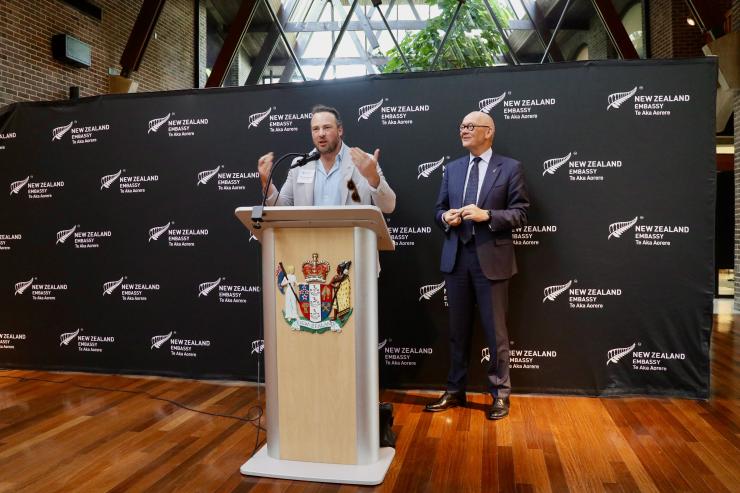
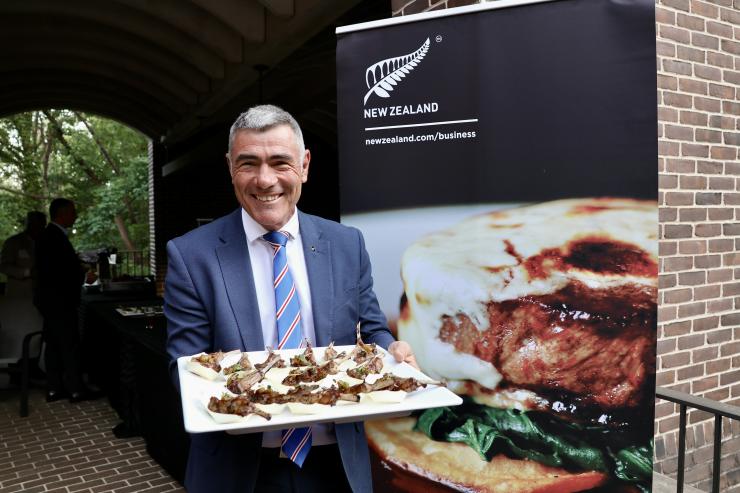
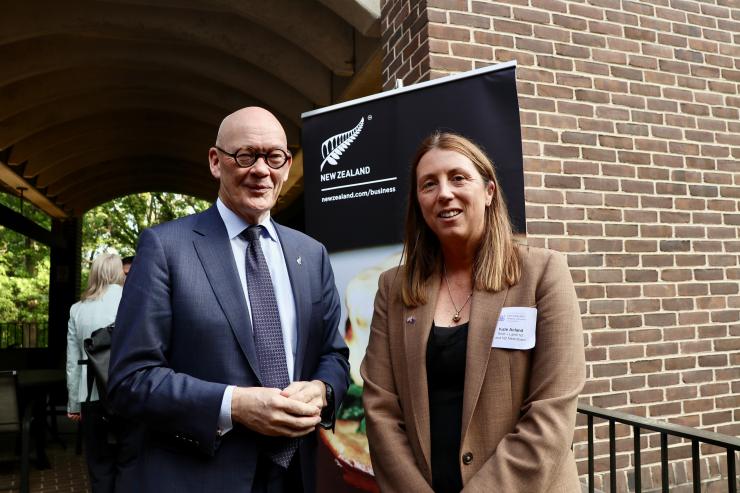
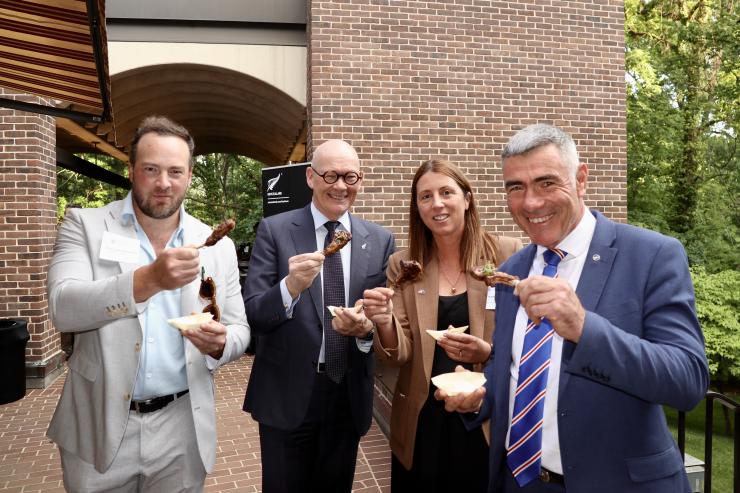
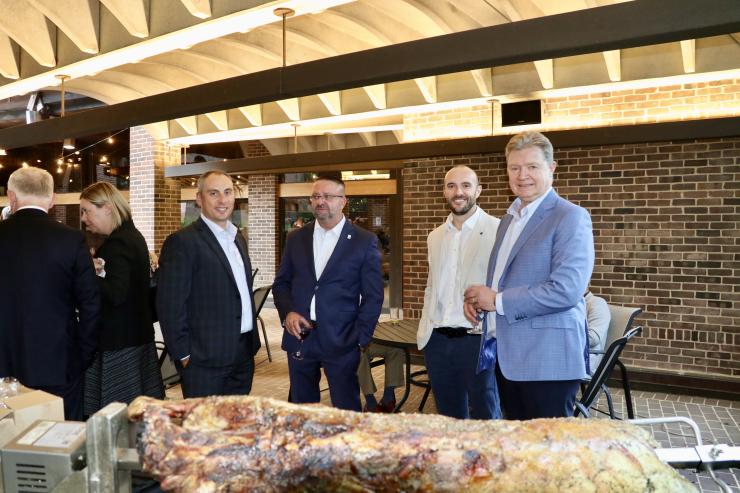
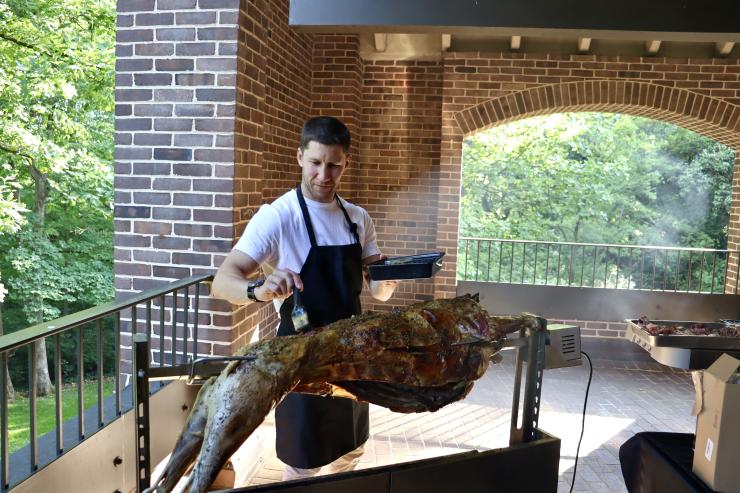
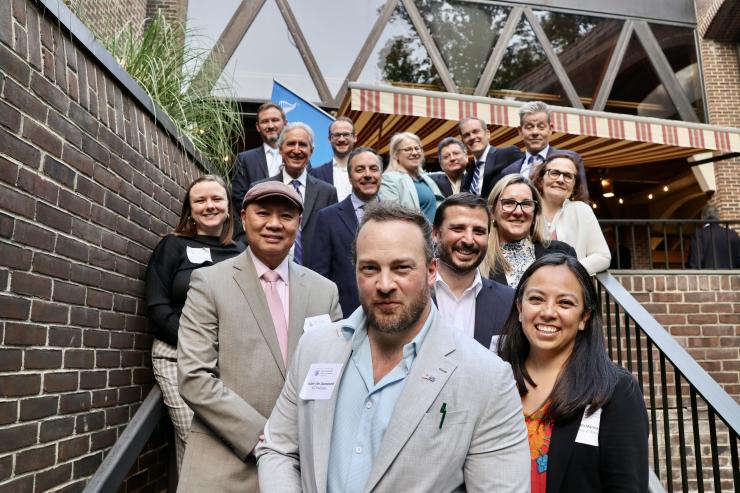
A trade relationship that has spanned 100 years is an achievement worth celebrating. To mark the occasion, B+LNZ teamed up with the Meat Industry Association, the New Zealand Meat Board and the New Zealand Embassy in Washington DC to host a BBQ for key US stakeholders in May. This will be followed later this year by an event in Wellington where we will be joined by US and Canadian representatives.
We also commissioned a short history of the North American market (PDF, 4MB) by Ali Spencer and Mick Calder, the authors of Meeting Change.
Trusted, lean and long-game traces the journey of how a young industry, focused almost entirely on the UK in the 1920s, built a deeply collaborative set of relationships with North American processors, government officials, customers and producer groups, and helped shape global meat trade rules that endure today.
Laying the foundations
It all started in the early 1920s, when the UK was still New Zealand’s primary market for agricultural exports. A number of challenges in that market led the newly established New Zealand Meat Producers Board to seek diversification in North America.
Compared to exports to the UK of 2,930,517 hundredweight or ‘cwt’ (equivalent to nearly 149,000 metric tonnes), initial volumes of exported meat to North America were tiny – 292 cwt (14 tonnes) to the US and 261 cwt (13 tonnes) to Canada in 1925/26.
By 1928/29, they had grown to 248,625 cwt (nearly 9,000 tonnes) and 27,055 cwt (1,100 tonnes) respectively. Reported prices were favourable, validating the Board’s view that North America offered genuine potential.
However, new tariffs introduced in 1930 to protect American farmers effectively shut the door on New Zealand meat for several years.
The outbreak of WWII in 1939 saw New Zealand contracted to supply all its sheepmeat and beef exports to the UK. This arrangement lasted until 1953, when the Board began re-establishing North American links, with 50,000 lamb carcases sent to Canada and the restart of business with the US.
This coincided with a rapid fast-food business expansion in the US and laid the foundation for a significant lean beef ingredients trade. New Zealand beef was to become an important component in the hamburger trade.
Stricter hygiene laws introduced by the US in the late 1960s forced significant and costly upgrades in New Zealand processing plants although these ultimately proved vital to maintain access to other international markets.
Lamb exports grew more slowly but research and innovations to develop products that met US customers’ needs were an early example of New Zealand’s willingness to innovate to meet market expectations.
Innovation, containerisation and expansion
The 1970s brought transformational changes in logistics. The arrival of the first dedicated container ship, Columbus New Zealand, in New Zealand on 19 June 1971, enabled faster, safer and more efficient refrigerated shipments.
Containerisation became standard practice, improving product consistency and reducing costs.
By the mid-1980s, the US had become New Zealand’s largest beef market, primarily for lean beef blended with US beef from feedlot cattle to produce ground beef used in hamburger patties.
However, quota volatility, voluntary restraint agreements (VRAs) and counter-cyclical import controls were recurrent features. Despite the challenges, New Zealand continued to foster constructive relationships with US producer groups.
The 1994 GATT Uruguay Round finally brought agricultural products under comprehensive multilateral trade rules, and strengthened dispute settlement through the newly formed World Trade Organization (WTO). This was a watershed moment for New Zealand, opening the way for more transparent and predictable market access.
Food safety, technology and high-value growth
The first quarter of the 21st century has seen increased attention on food safety. New Zealand’s freedom from bovine spongiform encephalopathy (BSE) and foot-and-mouth disease has proved a major competitive advantage.
Technological innovation has also accelerated. Developments in accelerated conditioning and aging (AC&A), improved packaging, and later robotics and genetics, have lifted product quality and consistency.
New Zealand exported over NZ$3.4 billion worth of red meat products to North America in the year ending December 2025. Co-product exports, including wool, added a further $440 million. Both represented an impressive testament to a century of partnership and resilience.
As New Zealand looks ahead, the US and Canada remain among its most valued trading partners, within its export mix of 110 markets. The North American markets recognise New Zealand for what it has spent 100 years demonstrating: quality, reliability, safety, integrity and a willingness to adapt to market needs.
Find out more
- Want to know more? Read Trusted, lean and long-game (PDF, 4MB) the history of 100 years of New Zealand meat exports to North America.
- Listen to the B+LNZ podcast to unpack the story and what it means for the future. We're joined by Ali Spencer and Mick Calder to discuss the insights behind Trusted, Lean and Long Game.
Download the booklet (PDF, 4.1MB)
The New Zealand Embassy in Washington DC brought together New Zealand and American meat partners to celebrate 100 years over a Kiwi BBQ on 4 May 2026. Ambassador Chris Seed and agricultural attaché Adam Van Opzeeland were joined by New Zealand's Special Agricultural Trade Envoy (SATE) Nathan Guy and Kate Acland, chair of both Beef + Lamb New Zealand and the New Zealand Meat Board.